
Whole House Water Filtration in La Jolla, CA: Is Your Tap Water Actually Safe?
Quick Summary
San Diego tap water meets every state and federal health standard, but it's very hard, averaging about 13 grains per gallon, and treated with chloramine. Whole house filtration reduces chlorine, chloramine, and sediment at every tap, while softening tackles scale. We install Springwell systems, and most installations take four to eight hours.
Yes, San Diego tap water is safe to drink. According to the City of San Diego’s latest water quality report, the city’s tap water met every state and federal drinking water health standard in 2024. But safe and ideal aren’t the same thing. The water reaching La Jolla homes is very hard, disinfected with chloramine, and travels a long way before it reaches your faucet.
That’s where a whole house water filtration system San Diego homeowners can rely on makes a real difference. Below, we break down what’s in your water, how filtration works, and why we install Springwell systems for our La Jolla customers.
What's Actually in San Diego Tap Water?
Most of our water is imported. The city’s 2024 Annual Drinking Water Quality Report notes that San Diego historically imports 80 to 90 percent of its supply, mainly from the Colorado River and the State Water Project. That water is treated at the Alvarado, Miramar, and Otay plants before it reaches your neighborhood. Here’s what comes along for the ride.
Hard Minerals
The report lists average total hardness between 216 and 230 parts per million at the city’s three treatment plants. That’s roughly 12.6 to 13.4 grains per gallon, which is considered very hard water. Calcium and magnesium aren’t a health risk, but they leave behind:
- White crust on faucets, shower heads, and glass doors
- Spotty dishes and stiff laundry
- Scale buildup inside pipes, fixtures, and appliances
Chlorine and Chloramine
To keep water safe as it moves through miles of pipe, the city uses chloramines, a blend of chlorine and ammonia. Levels averaged 1.73 ppm in 2024, well within the 4.0 ppm limit. It does its job, but many homeowners notice a chemical taste or smell, plus drier skin and hair after a shower.
Sediment From Aging Pipes
Even treated water can pick up rust, sand, and debris on its way through older municipal lines and your home’s own plumbing. In established neighborhoods with original piping, that sediment can show up as cloudy water or clogged aerators.
Why Hard Water Matters for Your La Jolla Home
Hard water does more than affect taste. Over time, scale builds up inside the equipment you rely on every day. Here’s what we see most often:
- Water heaters losing efficiency as minerals settle in the tank, one of the most common reasons homeowners call us for water heater repair
- Shower heads and faucet aerators clogging and losing pressure
- Dishwashers, ice makers, and washing machines wearing out sooner than they should
- Fixtures corroding and starting to drip
Many La Jolla homes feature high-end fixtures and appliances, so protecting that investment makes even more sense. We’re proud to offer La Jolla plumbing services that help homeowners protect their fixtures and appliances for the long haul.
Signs Your Home Could Benefit From Whole House Filtration
Not sure if filtration is worth it for your home? These are the signs we look for during a visit:
- Your tap water smells or tastes like a swimming pool
- You buy bottled water because you don’t like drinking from the tap
- White scale returns to fixtures soon after you clean them
- Your skin feels dry or itchy, or your hair feels dull after showering
- Water pressure has slowly dropped at shower heads and faucets
If two or more of these sound familiar, a whole house system is likely a smart investment. We’ll test your water and walk you through options before recommending anything.
How a Whole House Water Filter Works in San Diego Homes
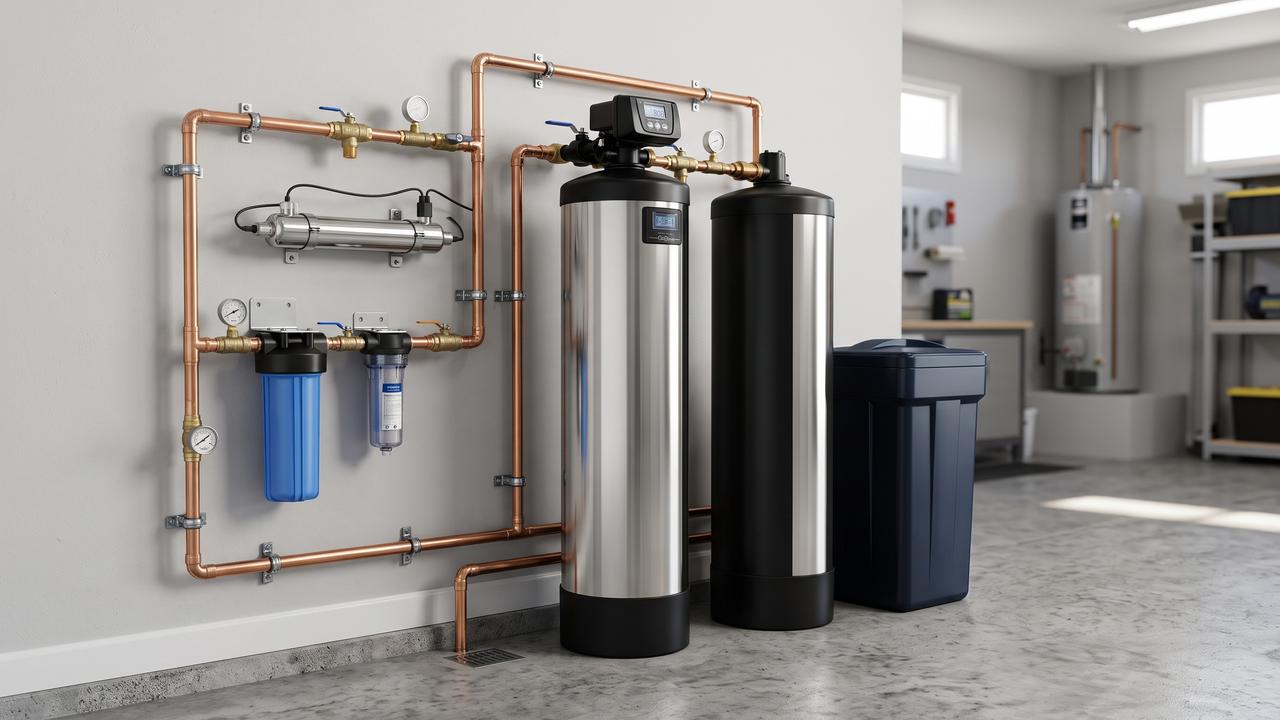
A whole house system, also called a point-of-entry system, is installed where your main water line enters the home. Every drop that flows to your kitchen, bathrooms, laundry room, and outdoor spigots passes through it first. Most systems work in stages:
- Sediment pre-filter: Catches sand, rust, and debris before they reach your plumbing.
- Carbon filtration: Uses activated or catalytic carbon to reduce chlorine, chloramine, and compounds that affect taste and odor.
- Optional conditioning: Adds a water softener or salt-free conditioner to tackle hardness and scale.
The result is cleaner, better-tasting water at every tap, not just the kitchen sink.
Why We Install Springwell Whole House Filtration Systems
Plenty of companies resell generic, one-size-fits-all filters. We take a different approach to San Diego water filtration. At Sunset Cliffs Plumbing, we carry Springwell systems because they’re built for the water our customers actually deal with. Here’s why we recommend them:
- Catalytic carbon media designed to reduce chloramine, not just chlorine
- The option to pair filtration with salt-free conditioning for hard water
- Systems sized to your household’s usage, so flow and pressure stay strong
- Straightforward, low-maintenance filter changes
If you’re comparing options for a whole house water filter in San Diego, keep in mind that the installer matters as much as the equipment. Because we install what we carry, we size each system correctly, plumb it to code, and service it for years to come. Explore our whole house filtration services to learn more.
Whole House Filtration vs. Reverse Osmosis: Which Do You Need?
This is one of the most common questions we hear. The short answer is that they solve different problems, and many homes benefit from both.
- Whole house filtration treats all the water entering your home, reducing chlorine, chloramine, and sediment at every faucet and shower.
- Reverse osmosis is a point-of-use system, usually installed under the kitchen sink. It removes a much wider range of dissolved solids for drinking and cooking water.
Pairing a whole house system with reverse osmosis installation gives you plumbing protection throughout the home and premium drinking water in the kitchen.
What to Expect When We Install Your System
We keep the process simple from start to finish:
- Water assessment: We review your water, home size, and daily usage.
- System recommendation: We recommend the right Springwell setup for your needs and budget.
- Professional installation: Most standard installs take four to eight hours. Homes that need pipe rerouting or a drain connection may take longer.
- Walkthrough: We show you how the system works and when to change the filters.
Members of our Membership Program also enjoy priority scheduling, waived diagnostic fees, and 10% off plumbing services.
Get Cleaner Water in La Jolla With Sunset Cliffs Plumbing
San Diego’s water is safe, but it can be better. As a family-owned, licensed C-36 plumbing contractor based in Point Loma, we bring 30+ years of industry experience to every home we serve. Call us at (619) 786-2031 or contact us online to schedule your whole house filtration consultation in La Jolla.
Back to all plumbing guides.
FAQs
Whole house filtration treats all the water entering your home to reduce chlorine, chloramine, and sediment. Reverse osmosis treats water at a single faucet, usually the kitchen sink, and removes a wider range of dissolved solids. Many homeowners choose both for complete coverage.
Most standard installations take four to eight hours. If your home needs pipe rerouting, electrical work, or a new drain line, the job may take a bit longer. We'll give you a clear timeline before we begin.
We carry Springwell because its catalytic carbon media is designed to handle chloramine, the disinfectant San Diego uses in its water. The systems are easy to maintain and can be paired with salt-free conditioning for hard water.
Standard sediment and carbon filters don't remove calcium and magnesium. To address hardness, we pair filtration with water softener installation or a salt-free conditioner.