
Whole House Water Filtration in San Diego, CA: Is Your Tap Water Actually Safe?
Quick Summary
San Diego tap water meets state and federal safety standards, but treated water can still carry chlorine, sediment, and trace minerals that affect taste, smell, and long-term wear on pipes and appliances. A whole house water filtration system in San Diego treats water at the point it enters the home, improving quality at every faucet, shower, and appliance rather than just one tap. Choosing the right system depends on household size, existing plumbing, and which contaminants concern the people living there most.
Turning on the tap and getting a glass of water feels routine, but plenty of homeowners still wonder what exactly comes out along with it. A whole house water filtration system in San Diego treats every drop entering the home, not just the water from a single filtered pitcher or faucet attachment.
Understanding what’s in the water supply, how filtration works, and what it can improve helps homeowners decide if a whole home system makes sense for their household.
What's In San Diego's Tap Water
Municipal water in San Diego goes through treatment before it reaches any home, and that process removes most harmful pathogens and regulated contaminants. Even after treatment, though, water traveling through the city’s distribution system and then through a home’s own pipes can pick up chlorine or chloramine used for disinfection, sediment from aging municipal infrastructure, and dissolved minerals that make the region’s water noticeably hard.
Older homes add another layer to the picture. Homes with outdated plumbing, particularly those built before certain fixtures and solder materials were phased out, can introduce trace amounts of metals into water as it passes through aging pipes on the way to a faucet.
Disinfection byproducts round out the list of things worth knowing about. Water treatment plants add chlorine or chloramine to kill bacteria and other pathogens before water leaves the facility, which keeps the supply safe from a public health standpoint. That same disinfectant can react with naturally occurring organic material in the water, forming trace byproducts along the way.
Regulators monitor these byproducts closely and set limits designed to keep any health risk low, but homeowners who want to reduce exposure even further often look to filtration as an added layer of control.
Is San Diego Tap Water Safe to Drink?
San Diego’s municipal water supply meets the safety standards set by state and federal regulators, and the city publishes regular water quality reports that homeowners can review. Meeting a legal standard, though, is not the same as water tasting great or being ideal for every use in a home.
Many homeowners notice a chlorine smell or taste straight from the tap, especially in warmer months when disinfectant levels sometimes increase. Hard water also leaves mineral deposits on fixtures, appliances, and glassware over time, which points less to a safety concern and more to a quality-of-life issue that filtration can address directly.
It helps to separate two different questions here. The first is if the water leaving the treatment plant meets legal safety thresholds, and for San Diego, the answer is generally yes based on published testing. The second question is what happens to that water on its way through miles of municipal pipe and then through a home’s own plumbing before it reaches a glass.
That second stretch is where most of the taste, smell, and mineral issues homeowners notice develop, and it’s also the part of the journey that a whole house system is positioned to address directly.
How Whole House Filtration Works
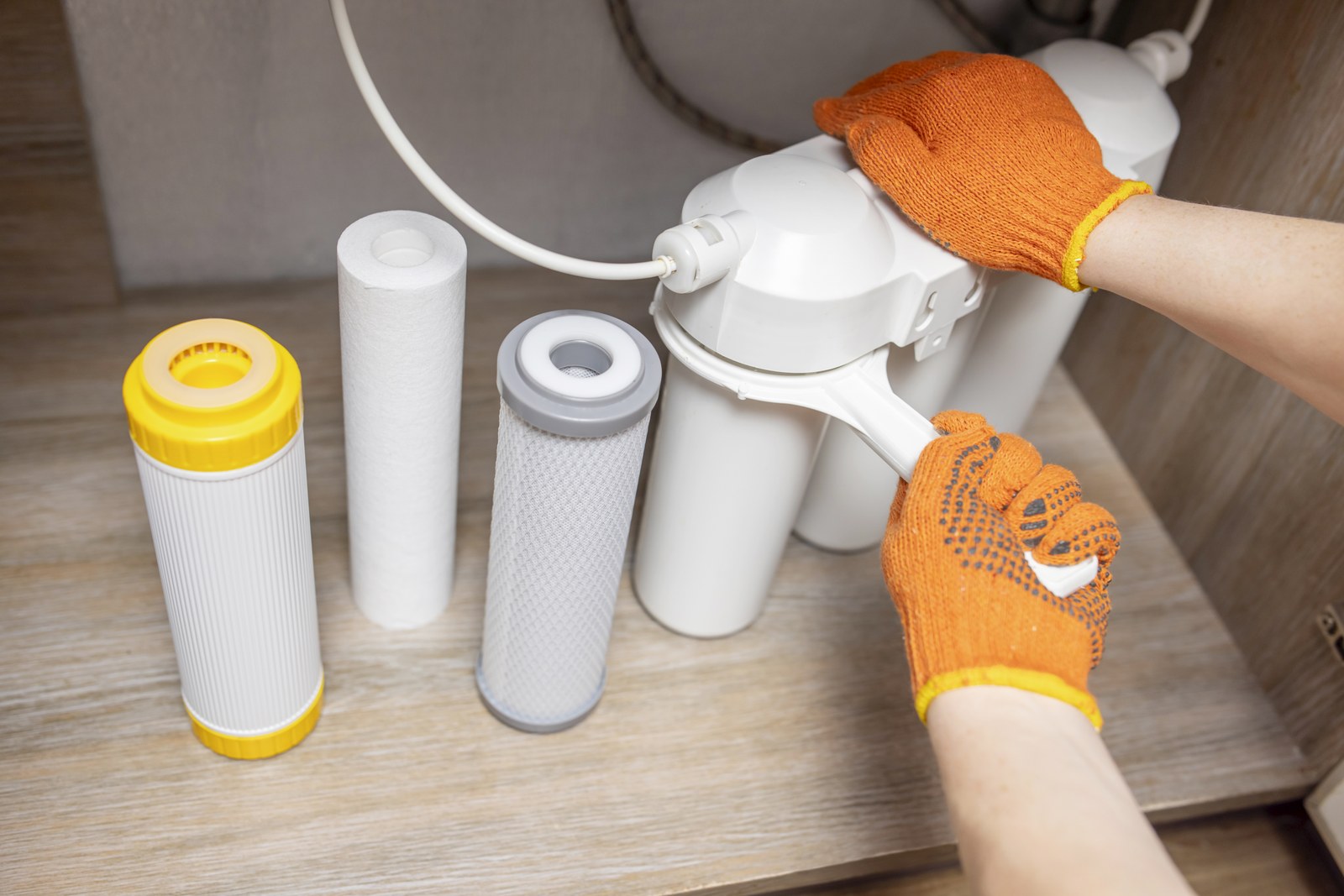
A whole house system installs at the point where water enters the home, treating everything before it splits off to individual fixtures. Most systems start with a sediment pre-filter that catches larger particles like rust, sand, or debris before water moves further into the system.
From there, water typically passes through a carbon filtration stage, which targets chlorine, chloramine, and many compounds responsible for unpleasant taste and smell. Some systems add a KDF stage to reduce chlorine further and limit bacteria growth within the filter media itself. Homes dealing with heavy scale buildup sometimes pair a whole house filter with a water softener, addressing both filtration and hardness in a single combined setup.
Sizing and flow rate come into play at every stage of this process. A system needs to handle a home’s peak water demand, such as a shower running while a dishwasher and washing machine both operate, without creating a noticeable drop in pressure. Filter media also has a limited capacity before it stops performing effectively, which is why most systems come with a recommended replacement schedule based on household water usage rather than a fixed calendar date alone.
Benefits of Whole House Filtration for San Diego Homes
Cleaner water at every tap brings noticeable, everyday benefits. Drinking water tastes and smells better without a chlorine edge, and cooking with filtered water avoids introducing that same taste into food. Showers and baths feel different too, since reduced chlorine exposure is gentler on skin and hair over time.
Appliances benefit as well. Water heaters, dishwashers, and washing machines all last longer when sediment and scale buildup get filtered out before reaching internal components. Plumbing throughout the home also experiences less wear, since filtered water reduces the mineral buildup that narrows pipes and strains fixtures over years of use.
Households that rely on bottled water for drinking often find that a whole house system pays for itself over time. Instead of buying cases of bottled water week after week, every tap in the home delivers water that tastes clean straight from the faucet. That convenience extends to cooking, brewing coffee, and filling pet water bowls, all without the ongoing cost and waste that comes with bottled alternatives.
Choosing the Right System for Your Home
Household size plays a big role in sizing a whole house system correctly. A larger household with higher daily water use needs a system built to handle that flow rate without a drop in water pressure. A San Diego plumber measures your home’s usage patterns and existing plumbing setup to recommend a system sized appropriately rather than guessing at a generic model.
Budget and priorities also shape the decision. Some homeowners want a straightforward carbon filtration system focused on taste and chlorine removal, while others prioritize a combined filtration and softening setup to tackle San Diego’s hard water at the same time. A licensed plumber can walk through the options and help match a system to both your water concerns and your budget.
Why Choose Sunset Cliffs Plumbing for Whole House Filtration
Sunset Cliffs Plumbing brings over 30 years of hands-on plumbing experience to water filtration installations throughout San Diego County. Our technicians assess your home’s water quality and daily usage before recommending a system, so you get a setup built for your household instead of a one-size-fits-all solution.
As a family-owned, locally operated company, we stand behind No BS pricing, meaning your upfront quote matches your final invoice. Our phones are answered 24/7, and our team provides same-day service Monday through Friday to get your filtration system installed fast. Neighborhood plumbing, premium results, that is the standard we bring to every filtration project we take on.
Contact us for more information on our whole house water filtration services in San Diego today!
FAQs
Filtration targets chlorine, sediment, and other contaminants that affect taste, smell, and safety, while a softener specifically addresses hardness caused by calcium and magnesium. Many homes benefit from pairing both systems together.
Most systems need filter cartridge replacement every three to twelve months depending on the filter type and household water usage. A plumber can set up a maintenance schedule based on your specific system.
A properly sized system should maintain normal water pressure throughout your home. Pressure drops typically happen when a system is undersized for the household's water demand, which is why proper sizing during installation matters so much.
No single system removes every possible contaminant, and different filtration stages target different substances. A plumber can recommend a system or combination of systems based on the specific concerns identified for your home's water supply. Homes that want an extra stage for drinking water often pair whole house filtration with a reverse osmosis system at the kitchen sink.